

Here in Canada, we got Thanksgiving out of the way back in October. For a lot of us, that meant a brief, oddly distant return to the version of the middle class we were raised to believe we’d be part of more permanently - otherwise known as visiting our parents’ house (since they’re the only ones with enough space).
Last week, many Americans completed the same (festive!) humiliation ritual, with plenty more similar existential reminders of where we all actually stand still to come as the holiday season ramps up.
For me though, it’s the part of our Thanksgiving that used to feel particularly Canadian - but maybe doesn’t anymore - that’s been rattling around in my head whenever I think about such family “fun” times.
For some of us, that might have meant heading to the family cottage - a second home we’re told we might inherit one day, unless our parents decide to cash in what they likely inherited from their own parents instead of passing it down.
I’ve always had a bit of a complicated relationship with the cottage, truth be told (as with my family of origin itself).
But my relationship with my grandparents who built it was actually the least complicated of anyone in my family. I simply loved them, in a way the complexities with others never allowed, even given a lifetime of what should have been plenty of complications there, too.
So I kind of feel like I should appreciate it more. Like I am ungrateful for what they left me. But practically, though they probably did intend it to be around for me and my generation too, they actually left it to their daughters (my mom and my aunt), whose management of it kind of speaks to where a lot of the more complicated feelings come from.
Much like it was largely my grandparents’ generation that built the infrastructure we still use today, more so than my parents’ - my grandparents had the cottage built. And one of the last things my grandfather ever did was have an addition built for us, to give us room to grow.
But even as the family has kept growing in the decades since, no further additions have been built. Just some patchwork fixes here and there, only when something literally could not be left as is anymore. No major renovations. Just more people jammed into a place that was never really updated to fit them (the metaphor for how we’ve handled immigration these last few years practically writes itself, if I were more troll-y inclined).
And when I very gently mentioned we might want to more proactively update some things sometime, my aunt - who I love, and who in many ways is more aware, at least on a macro level, of generational issues than most people her age, who was a better aunt than most people get, and who I don’t want to just sneer about - nonetheless delivered a line that was a little too perfect not to include here…
“That’s for the next generation”.
And I can see that attitude in how both my parents and my aunt and uncle have managed the place. Some of it was just disagreements - DIY versus “pay someone,” or the awkward life-stage mismatch of two families sharing one cottage. But some of it really did come down to that mentality.
My mom in particular gives a great (terrible) example of this.
As the eldest of the next generation, once I was old enough to start getting a bit annoyed that nothing ever got updated, I just started suggesting that I buy some things myself. One year I suggested to my mother that my partner and I could buy new furniture for the screened porch we all loved to hang out in as a Christmas gift for the extended family, in lieu of what I usually spend on all of them, since the old, rotting pieces we had were making it less enjoyable to spend time there.
She got upset at the idea because, in her mind, that would mean my aunt, uncle and cousins would end up getting the same value of gift she, my dad and brother would get. She didn’t like that the benefit of the money would be evenly shared. She felt that if I calculated what I usually spent on everyone and instead put that toward shared furniture for all of us to enjoy, that meant she was forfeiting some of what should go more directly toward her side of the family, since I typically spent more on my parents and sibling than on my aunt, uncle and cousins. And she was surprisingly (even to me, though I do know my mother) mad about that.
So we didn’t get the furniture, and we still have that increasingly uncomfortable set out there, ten-plus years later. It used to be my favourite spot, and I don’t even like sitting there anymore.
The parallels to how short-term thinking on spending leads to the bigger cost of rotting infrastructure are pretty obvious. The same mindset is also clearly at play in how we treat Old Age Security.
Well-off seniors with six-figure incomes still expect to receive OAS and get upset at the idea of any cuts, even when tightening eligibility would let seniors who are actually struggling receive more support. And if you dare go one step further and point out that what was supposed to be protection from poverty has slowly turned into a way to pad already comfortable retirements, at the expense of younger generations who are taxed to fund a level of comfort they are unlikely to ever see themselves, that tends to go over even worse.
Again, much like the obvious but decidedly glossed-over immigration allegory earlier, this stuff almost writes itself. But I also think about how this same mindset plays out in more nebulous ways.
During Covid, I wrote about how the tiny towns near my cottage were building up, and later about how that made me see the real potential in reimagining how we live and work - especially in the context of what I still think was the one truly great thing to come out of our Covid response, the shift to remote work.
Well, long story short, all of that has not just reversed, but turned into a funhouse-mirror dark alternate reality version of where it was looking like it could go.
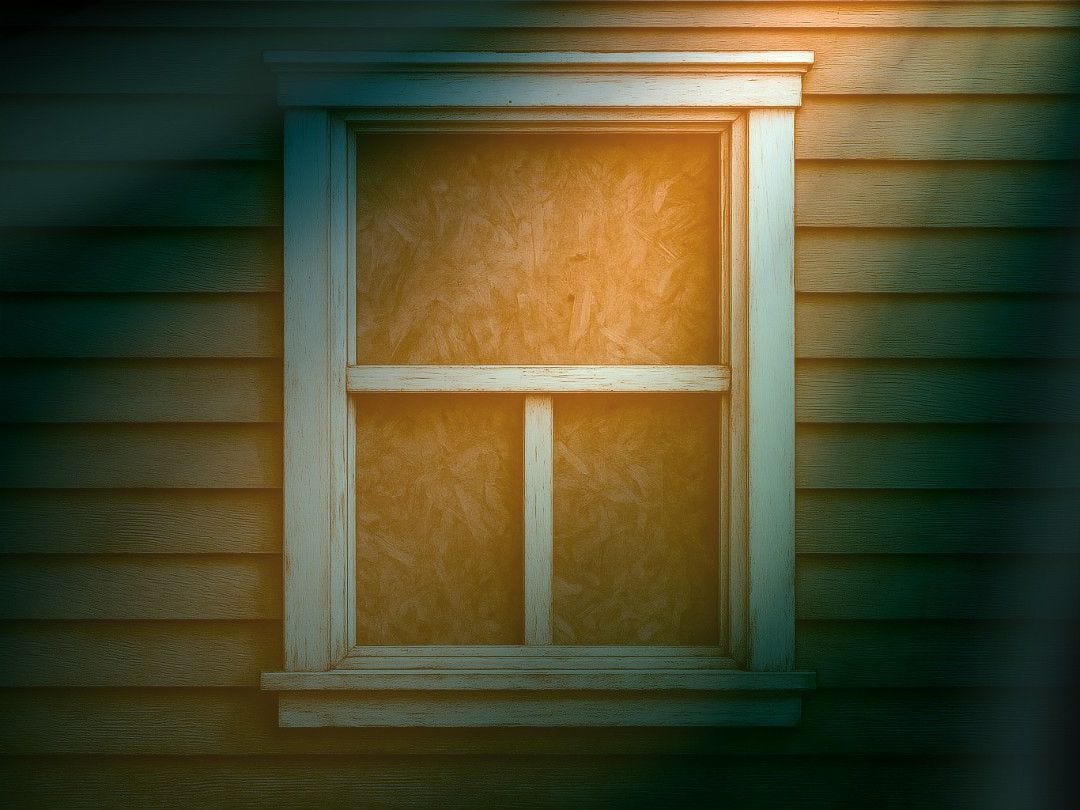
The closest such tiny town is now pretty much all boarded up, literally. Not just every second home, but every second business closed and up for sale (and there were not many businesses to begin with).
I’m sure some of that is simply down to people realising they didn’t, in fact, want to commit to living somewhere that feels magical right up until you run out of something basic in the dead of winter, when the roads still haven’t been plowed, there’s nowhere in walking distance, and getting to even that one tiny town nearby is nearly impossible. At that point, the ruggedly austere infrastructure in such regions starts to feel less like a quaint inconvenience and more like an existential threat.
But I’m also sure a lot of it has to do with how quickly too many people snapped back to discouraging any kind of dispersed, affordable, sustainable economy in favour of preternaturally preserving the old economy built around the outdated assumption that real work only happens in and around offices.
If we had actually committed to remote work instead of pushing people back to support everything built up around that office-centric way of working (even if I still think that’s going to fail anyway, it’s still keeping us from moving forward), places like those tiny towns could have been built up instead of boarded up.
Cities are great, but I’m not sure they’re as necessary in the way they used to be; we don’t really have to cling to an industrial-office model when technology finally lets us build something closer to how people have always actually liked to live.
We can be remote but not luddite, dispersed but not disconnected. We could have headed away from big cities and back toward villages; tech-enabled villages where remote work brings in global income to fund local businesses, and connectivity strips away most of the old downsides of village life.
With remote work, we could have built more dense, walkable, properly serviced communities in a lot more places, taken pressure off the most overpriced regions, and spread opportunity and services out instead of insisting everyone crowd into a few major cities.
I do think we still can, and will - but as per all too usual, we’re going to have to wait for the boomers to get over their hissy fit at the premise of not having the absolute most and exactly what they want and, frankly, wait until there are fewer of them left to throw one that actually has an impact.
Boomers couldn’t even let us just take this chance to fix things they’d already broken - housing, work-life balance, the whole premise of how we build a life. They just had to push back on the way they think things should work, protecting what they feel entitled to, including returns on pension funds tied to commercial real estate, returns on city condos, and, frankly, the comfort of refusing anything new if they won’t personally benefit from it.
They also seem to love telling stories about their own parents’ sacrifices that they would never make themselves.
My mother talks about how my grandmother refused home care because she didn’t want her daughters to have to look after her - and is now very strongly hinting that she expects exactly that level of care from family. My dad used to brag about how his father, on very modest means, managed to save a good amount of money to leave to his kids, then would say he should have just spent the money.
The more I think about it, the more it sounds like they secretly think their parents were suckers.
They grew up in a world that mostly just kept getting better and seem to have decided that was down to their own special ingenuity, not to the investments that had already been made in them. So of course they don’t feel much obligation to do the same for the next generation - they don’t really recognize what was done for them in the first place.
Yes, there are plenty of exceptions, many who do things like help their kids with a large down payment. But taken as a cohort, the generation that benefited most from decades of public investment and the explosive asset growth that followed really does seem the most reluctant to invest in anyone but themselves.
I’ve never quite understood how that could be so strongly true of just one generation more than others (though of course every age has its takers). I don’t get why they don’t seem to care at all about what they leave behind. The best way I can make sense of it is that they lived through such a long run of unprecedented growth they just don’t understand what it takes to create that. Anyone who builds for the future instead of maximising the present looks, to them, like they’re being taken advantage of on a collective scale you don’t really see in other generations.
I see a lot of hand-wringing lately about shared identity and shared values, but I really think a lot of what gets swept into that is just us all fighting more as we feel less secure thanks to this generationally unprecedented self-interest. Where some people see a culture war, I think it’s mostly what happens when the rent is just too damn high.
I’ve always thought it was actually a strength that our shared identity wasn’t built on anything mystical or ceremonial. I think it mostly centred around the idea that anyone from anywhere had a real chance at a good life here.
Some might dismiss that as hollow, but I think that’s a bit glib, honestly, because it actually implies a lot - and all of it good.
It implies an openness - that willingness to let people from anywhere make a go of it if they’re willing to put in the work.
It implies a belief that actually being able to get ahead on your own terms matters more than collective conformity (I know plenty of people hate that, but I don’t). It matters for the person living their own life, and it matters for a society that still wants to create new things instead of just protecting what already exists.
It implies a sense that where you came from doesn’t stop where you go next. A sense that where you start doesn’t determine where you end up.
That was Canadian values, to me. And we’re losing it. The loss of the cottage - and everything it represented - is a big part of that.
At the risk of being reductive, I really do think that more than people want to admit, what many keep trying to frame as culture or values or whatever is actually just down to whether the economy is working or not.
The waning ubiquity of “the cottage” encapsulates that perfectly. It was a symbol of just how healthy a middle class economy we used to have, that almost everyone at least knew what you meant when you were going “up north”. It wasn’t some secret routine of elites - it was the common privilege of many.
So many of us were able to thrive together because most people had a real chance to thrive on their own. We’re losing that as people’s odds narrow. It’s hard to take any kind of chance when you can barely make rent. Harder still when commercial rents are ridiculous and every basic input cost has gone feral. And it’s almost unthinkable that anyone in my generation still clinging to the middle class will be able to keep a family cottage when a regular house still costs an insulting amount.
It lands with the same kind of gut-level insult when boomers, like my mother, will openly admit that when it comes down to it, they just want things like OAS because they want it. They don’t care if it works. They want it anyway.
I really don’t like to just whine about things like this. I generally prefer to make the best of what I can rather than lament what I don’t have. I know I have it better than many people. I know many people never had a cottage to lose, or reject.
I still feel a sense of loss for a country where it was at least normal enough for people to have one that those who didn’t felt left out. I guess I’d rather our normal be that little bit of extra being achievable, instead of the basics being hard to maintain. Of course that was better for some than others, but really it was also better for everyone. A world where maybe not everyone had that, but it was much more possible to imagine you could.
Anyway. That’s where my mind is, heading into another holiday season where we’ll be confronted with much of the same again. Looking forward, in that very particular way, to visiting parents who expect to be treated the way their parents treated them, with absolutely no sense of duty to give what their parents gave. Looking backward at a cottage I’m not even sure I want anymore, even if I do inherit it.
As usual, our formerly beloved screened porch was boarded up after Thanksgiving. It gives a kind of pending finality to a feeling I’ve had on every visit lately. I catch myself wondering if that will end up being the last time I was ever there. Sometimes I even hope a tree will fall on it over the winter so the decision gets made for me. It’s the same feeling I have about the wider economy - the quiet wish that the long-overdue crash would just finally happen so we can stop propping up things that died years ago and start building something new.
Maybe that wider feeling is why my partner and I finally decided we’re not doing Christmas Day with my family anymore. We’re going to start new traditions so that maybe holidays can be something we enjoy instead of something we dread. At some point, you stop showing up to traditions that ask everything of you and give nothing back. You stop inheriting obligations that were never updated for the world you actually live in. You stop pretending the porch is cosy when it’s actually really uncomfortable and you don’t even want to be there anymore.
If the old middle class life - cottage and all - is gone, then maybe the only choice left is to build a new kind of life that doesn’t require escaping it on weekends. Something less precarious, less performative, less about hanging on to things that no longer make sense.
If a new economy is ever going to exist, it won’t be because the old one was patched together for one more season. It’ll be because it finally fell apart and left room for us to put new things in its place.